Skip to content
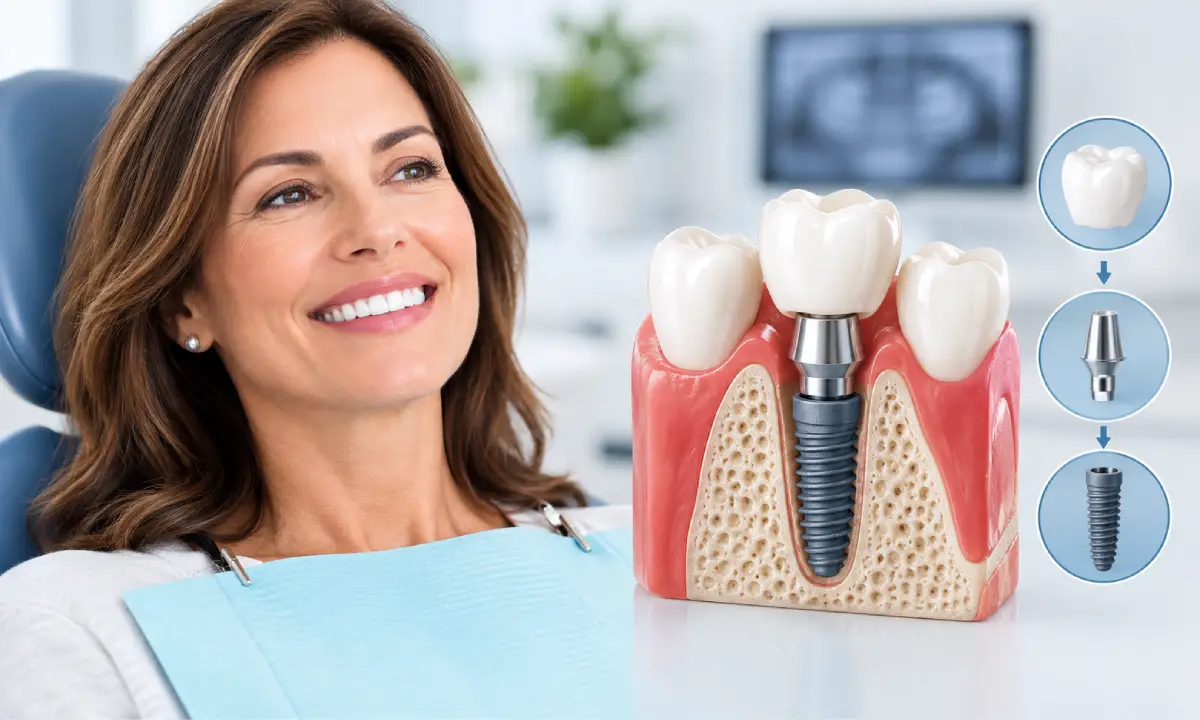
Table of Contents
You chew on one side without thinking about it. You angle your smile a certain way in photos. A missing tooth changes small daily habits long before it changes anything a dentist would call urgent, and plenty of people live with those adjustments for years.
Dental implants rebuild a missing tooth from the root up, rather than resting a replacement on the gum. That difference shapes how the treatment works and how long it lasts.
What Actually Happens When You Get a Dental Implant?
A titanium post is placed into the jawbone where the tooth root used to sit, and bone grows around it over several months. A custom crown is then fitted on top, restoring normal biting, chewing, and speech. Candidacy depends on gum health and bone density, and most patients maintain results for years with regular brushing, flossing, and regular dental visits.
What a Dental Implant Actually Is
An implant has three parts. The post is a small titanium screw placed in the jawbone, serving as the root of the missing tooth. The abutment connects it to the crown at the gumline. The crown is the visible portion, matched to the shade and shape of the adjacent teeth.
Osseointegration holds it together, meaning bone grows directly against the titanium until the post locks into place. That fusion is why an implant feels steady under a bite rather than shifting, as a removable appliance can.
Implant dentistry sits alongside the rest of our periodontal care in Mount Pleasant, since healthy gum tissue and bone are what make that foundation possible.
Why Replacing a Missing Tooth Matters Beyond Appearance
The jawbone needs a root to stay dense. Once a tooth is gone, the bone no longer receives the pressure it evolved to handle and thins through a process called resorption. This happens quietly, with no discomfort to signal it.
Neighboring teeth respond too. They drift toward the open space and tilt, changing how the upper and lower teeth meet and putting uneven pressure on the jaw joint.
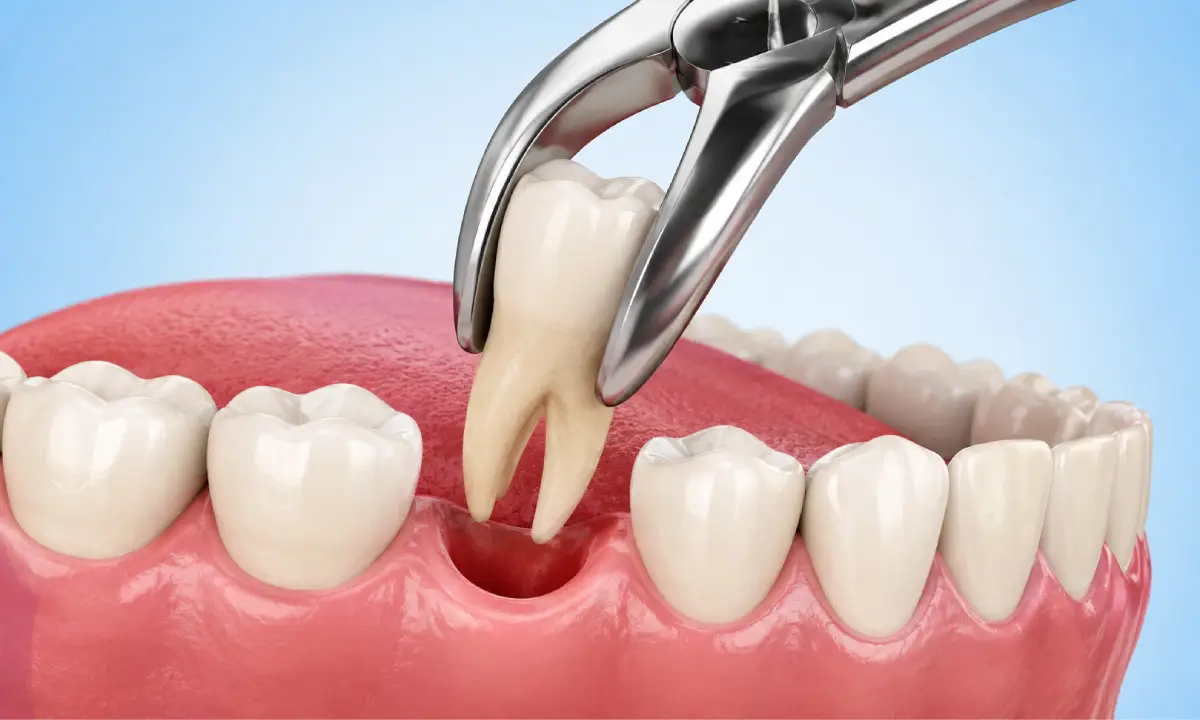
If a tooth has already been removed or is headed for extraction, planning the replacement early helps preserve more of the structure.
How Implants Replace One Tooth, Several Teeth, or a Full Arch
Implants scale to the gap, making them one of the more adaptable tooth-replacement options available.
- One missing tooth requires a single post-and-crown, leaving the healthy teeth on either side untouched.
- Several in a row can be restored with an implant-supported bridge, in which a few posts support a connected span of crowns.
- A full arch can be anchored on a set of placed implants rather than one post per tooth.
Traditional bridges and removable dentures still work well for some patients. Those sit above the gum; implants sit into the bone underneath.
What the Dental Implant Process Involves From Start to Finish
The dental implant procedure unfolds over several months, and most of that time is spent healing rather than attending appointments.
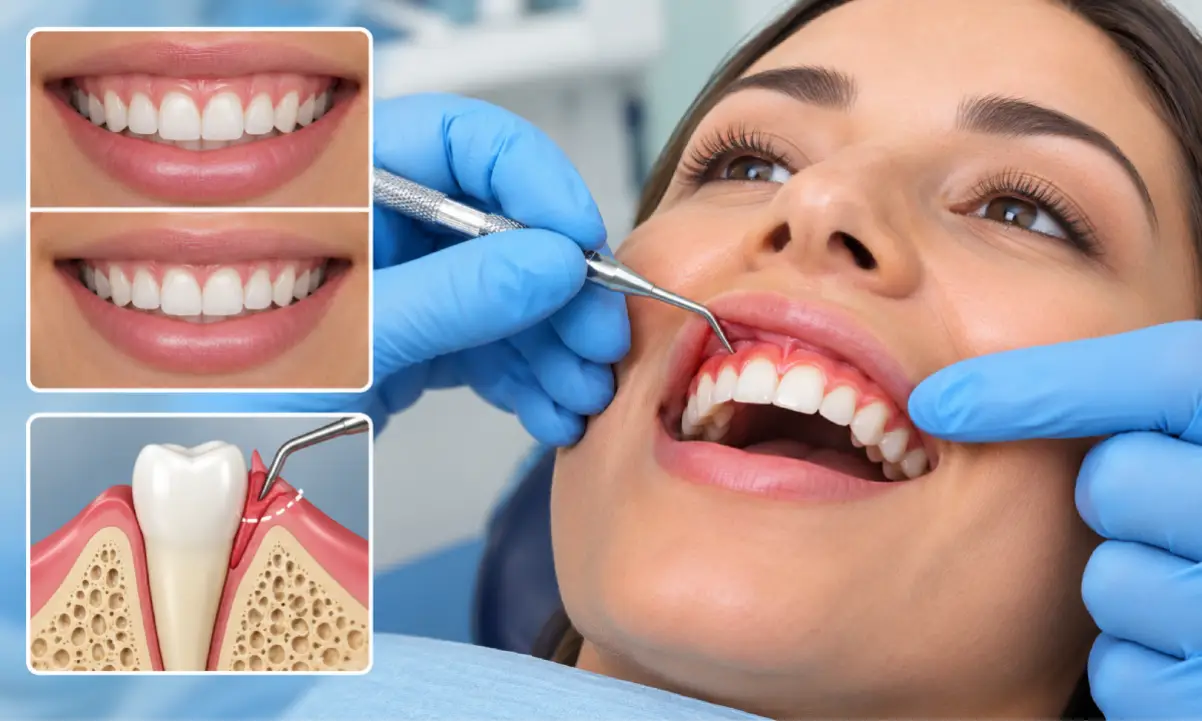
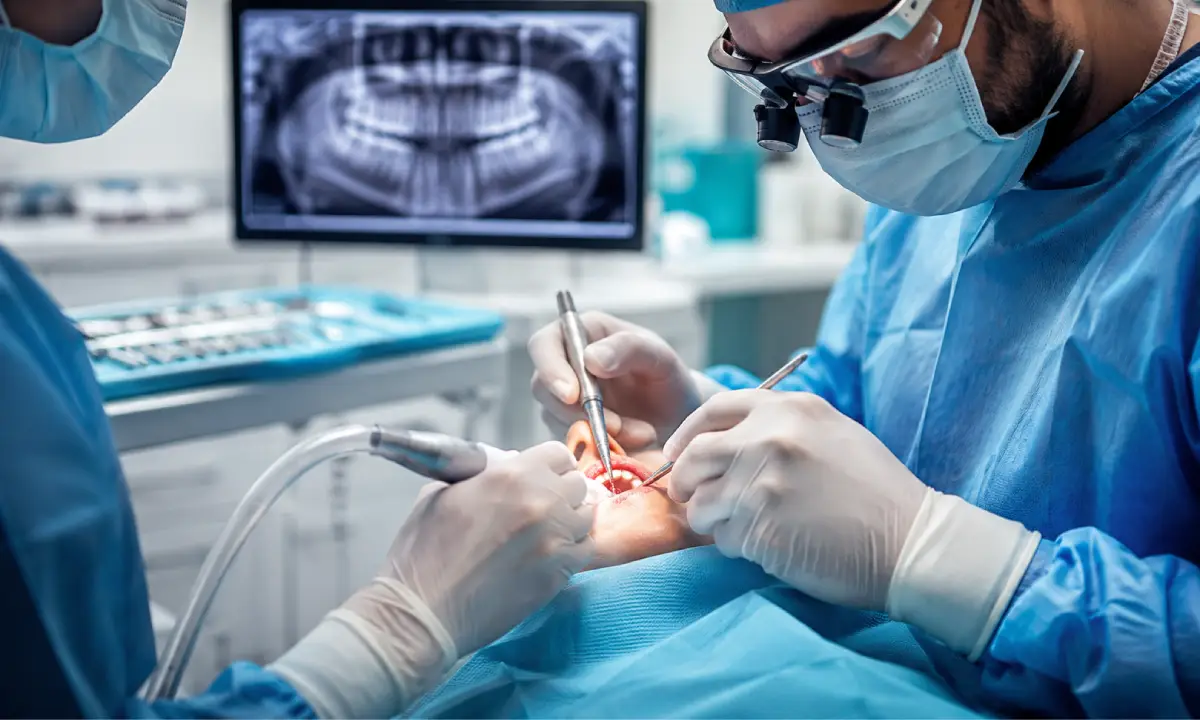
It begins with an evaluation. We check gum health, take imaging to measure bone density and map the nerves and sinuses, and confirm the site can hold a post. Placement is a focused surgical appointment under local anesthesia.
Then comes the waiting. Bone integrates with the post over roughly three to six months, and a temporary restoration can cover the gap in the meantime.
Once integration is confirmed, the dentist attaches the abutment and final crown. Mild swelling, tenderness, and occasional bruising are common afterward and usually settle within days.
Who Is a Good Candidate, and What Happens If You Are Not One Yet
The three most important factors are healthy gums, enough jawbone to hold the post securely, and a body that heals consistently. Smoking significantly slows healing, and conditions like poorly controlled diabetes should be addressed because they have an impact on integration.
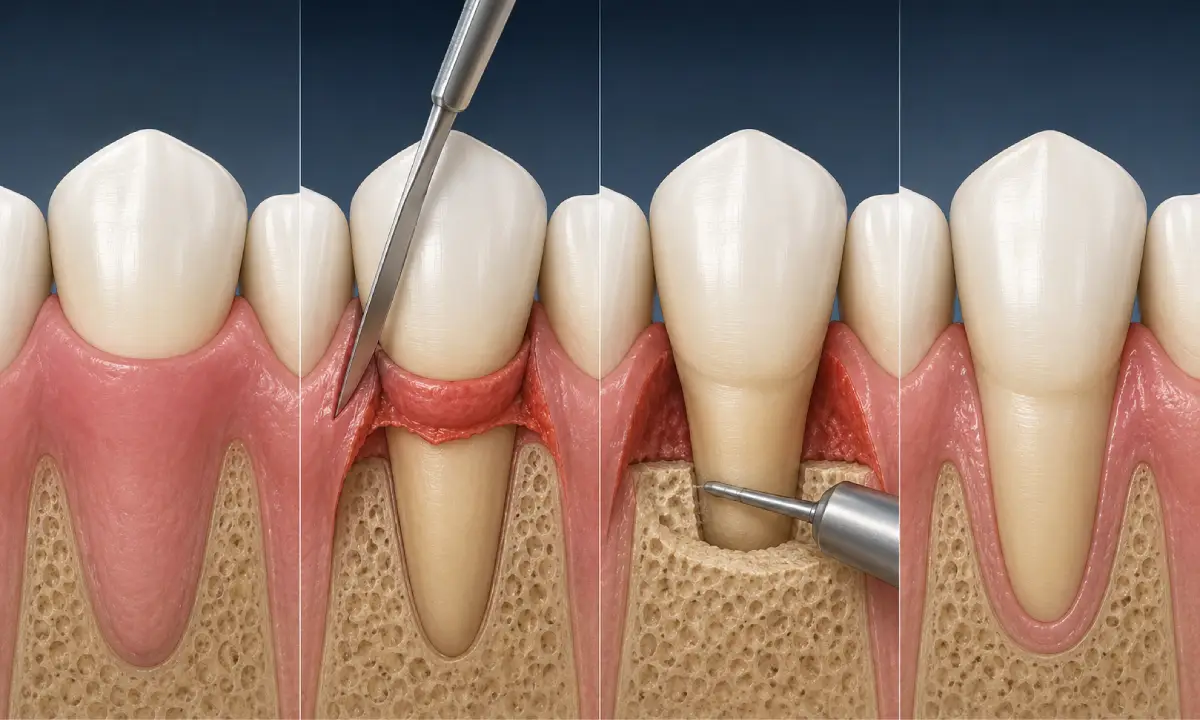
A borderline evaluation is rarely a closed door. Bone grafting can rebuild volume at a thinned site, and soft-tissue gum grafting can restore gum health first. Many patients told “no elsewhere” are really being told, “not yet”.
That sequencing is much of what dental implant treatment looks like in a periodontal practice, where the foundation is addressed before the restoration.
How Long Dental Implants Last and What Keeps Them That Way
Implants are often called permanent tooth replacements, and the titanium post can stay in place for decades when the surrounding tissue stays healthy. Results vary, and longevity depends more on maintenance than on the hardware.
Care is ordinary. Brush twice daily, clean between the teeth, including around the implant, and keep up with checkups and cleanings. The crown may eventually need replacement due to normal wear, even if the post remains sound.
Gum and bone around an implant can become inflamed, much like natural teeth develop gum disease, which is why our team at Periodontic Specialists by Solomon Dental monitors these sites long-term. Our page on Dental Implants in Mount Pleasant, SC covers what the treatment involves.
Common Questions About Dental Implants
Does getting an implant hurt?
Placement is done with local anesthesia, so you should feel pressure rather than pain. Soreness for a few days afterward is typical and usually manageable with the medication your provider recommends.
How soon can I eat normally again?
Soft foods for the first several days, then a gradual return to a regular diet as comfort allows. Keep hard and crunchy foods away from the site until healing is underway.
Will it look and feel like a natural tooth?
The crown matches surrounding teeth in shape and color, and because the post is anchored in bone, biting feels close to natural for most patients.
Rebuilding From the Root Up
Replacing a missing tooth means restoring what sat below the gumline, not only filling the visible gap. That is why dental implants hold their position, protect bone that would otherwise thin, and keep neighboring teeth from drifting.
The reasonable next step is an evaluation. Imaging and an assessment of your gums and bone density answer what a guide cannot: whether the site is ready now, whether grafting comes first, and how many posts your situation calls for. An hour replaces guesswork with a plan. Ready to replace missing teeth? Schedule a dental implant consultation to explore your treatment options.